Water Treatment

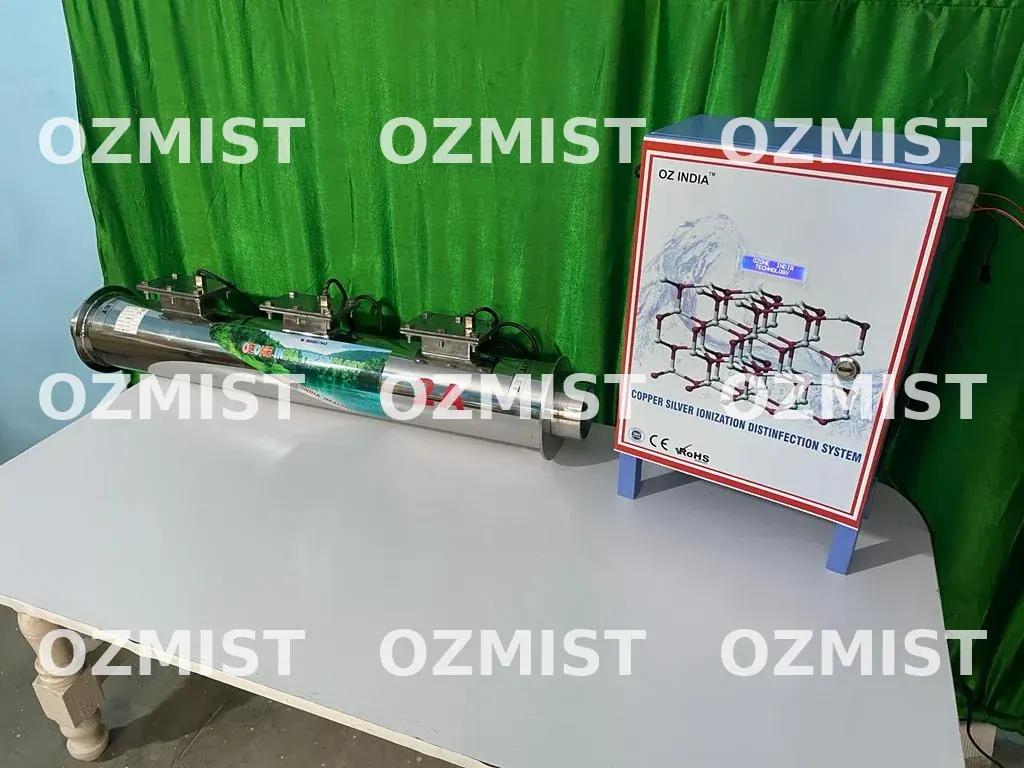
Silver Ionization Water Disinfection System

Chemical-free water disinfection using silver ion technology

Silver ionization water disinfection system by Ozmist Food, Greater Noida — chemical-free residual protection for cooling water, hospital and food-process systems

The Ozmist Food Silver Ionization Water Disinfection System uses controlled electrolytic release of silver ions (Ag+) into flowing water at concentrations below the WHO drinking-water limit of 0.1 mg/L. Silver ions bind to microbial thiol groups, disrupting cell membrane function and inhibiting bacterial and viral replication. Unlike chlorine, silver leaves no disinfection byproducts (no THMs, no HAAs) and provides long-lasting residual protection that prevents biofilm regrowth downstream. Sacrificial silver electrodes, current-controlled by a microprocessor to dose proportional to flow, are designed for extended service life (12–18 months typical). Applications include cooling tower Legionella control, hospital water safety plans, food-processing water, and industrial water systems where chemical-free disinfection is preferred. Manufactured at Ozmist’s Greater Noida facility with BIS-compliant construction and WHO-aligned dosing controls.

Key Features

  • Electrolytic silver-ion generation, flow-proportional dosing
  • Concentration below WHO 0.1 mg/L limit for drinking water
  • Sacrificial silver electrodes, 12–18 month typical life
  • No disinfection byproducts (no THMs, no HAAs)
  • Residual biofilm-prevention protection downstream
  • Effective at ambient temperature — no boiling required
  • Flow rates 500 L/hour to 50 m³/hour depending on model
  • Microprocessor control with amperage + flow readout
  • Electrode-life meter and replacement alarm
  • Sanitary connection standards; food-contact NSF-grade wetted parts

Technical Specifications

Technical specifications
ParameterValue
Flow rate500 L/h to 50 m³/h across models
Silver concentration output20–80 µg/L (well under WHO 0.1 mg/L limit)
ControlMicroprocessor; flow-proportional current control
Electrode typeSacrificial pure silver (99.99%)
Electrode service life12–18 months typical, depending on flow
Chamber materialFood-grade PP (small) / 316L stainless (industrial)
Effective againstLegionella, E. coli, Pseudomonas, biofilm-forming bacteria
ByproductsNone — no THMs, no HAAs, no chloramines
Operating temperature5°C – 40°C
Working pressureUp to 6 bar (industrial variants to 10 bar)
Power supply230 V / 50 Hz single-phase; low-voltage electrolysis power
Warranty18 months full unit; electrodes consumable

Real-World Industrial Applications

The Silver Ionization Water Disinfection System is deployed across a diverse set of Indian industrial and commercial contexts. What follows is a set of expert application briefs prepared by our engineering team, each describing the operating problem, the applicable Indian and international standards, and how Ozmist's configuration is engineered to meet it.

Every application description references peer-reviewed research or a named regulatory standard so procurement teams, quality engineers, and plant managers can validate the claims against their own audit expectations. Sources are cited in the References section at the end of this page. If your application does not match one of the profiles below, contact our engineering team via the quote form — the majority of custom Ozmist installations begin with a spec conversation rather than a datasheet pick.

Cooling Tower Legionella Control

HVAC / cooling water · WHO Cooling Tower Guidelines; NDMA HSE guidance

Legionella pneumophila colonises cooling tower water systems and can cause outbreaks of Legionnaires’ disease. WHO cooling-tower guidelines and Indian NDMA industrial safety guidance require documented Legionella control programmes. Silver ionization provides continuous, residual protection that chlorine dosing cannot match in the presence of high organic load and periodic sunlight exposure. Field studies (Journal of Applied Microbiology) show silver ionization at 40–80 µg/L reduces Legionella colony counts below detection limits within 6 weeks of commissioning. Ozmist supplies large hospitals, IT campuses, and industrial cooling water operators with 5–50 m³/hour ionization units.

Hospital Water Safety Plans

Healthcare · NABH; WHO WASH in Healthcare

Healthcare-associated Pseudomonas aeruginosa infections often trace to hospital water systems. Point-of-use silver ionization protects showers, hand-wash basins, dental unit water lines, and haemodialysis feed water in high-risk areas (ICU, transplant, burn units). NABH accreditation and the WHO Water, Sanitation and Hygiene in Healthcare guidelines increasingly reference water safety plans that include continuous residual disinfection. Ozmist supplies hospital operators with silver ionization units integrated into building water risers.

Food-Processing Water Systems

Food and beverage · FSSAI; Codex CAC/RCP 1

FSSAI regulation and Codex CAC/RCP 1 require food-processing water to meet drinking-water standards. Chlorination is standard but leaves chloramine odour and chlorophenol taints on final product. Silver ionization provides microbial control without off-flavours, particularly valuable for beverage, dairy, and clean-ingredient food manufacturers. Ozmist supplies bottling plants, dairy processors, and packaged-food manufacturers with in-line silver ionization on process-water rings.

RO System Post-Treatment and Storage Tank Protection

Water treatment / laboratory

Reverse osmosis systems produce microbially “clean†but not sterile water, and post-RO storage tanks are prone to biofilm regrowth. Silver ionization at low dosing on the RO permeate line prevents storage-tank biofilm without requiring chlorine that would defeat downstream deionisation resin. Common in laboratory water systems, pharmaceutical utility water, and premium bottled water plants.

Swimming Pool and Spa Chemical Reduction

Aquatics / recreation · WHO Safe Recreational Water Guidelines

Pool operators are moving to reduced-chlorine systems for guest comfort. Silver ionization combined with low residual chlorine (0.3–0.5 mg/L instead of standard 1.5–3 mg/L) delivers regulatory-compliant microbial control with far less chlorine odour and eye irritation. WHO Guidelines for Safe Recreational Water accept combined systems that meet the pathogen-inactivation criterion. Ozmist supplies hotel pools, gyms, and municipal aquatic centres with pool-grade silver ionization skids.

Rural and Community Drinking Water

Rural drinking water · WHO Guidelines for Drinking-water Quality; BIS IS 10500

Silver ionization is a WHO-recommended small-scale drinking water treatment for communities where chlorine supply chain is unreliable or where taste acceptance of chlorine is low. Ozmist supplies rural project implementers, government schemes, and NGO partners with skid-mounted silver ionization units for community water treatment plants serving 500–5,000 people.
Performance & Industry Data

Research-backed data supporting product selection, sizing, and ROI planning. Every chart includes a "View data table" button for accessible screen-reader access to the underlying numbers, and a source citation.

Comparative & Reference Data Tables

Silver in drinking water — regulatory limits
Region / standardSilver limitNotes
WHO GDWQ 4th ed.0.1 mg/LRecommended provisional guideline
US EPA (secondary)0.1 mg/LNon-mandatory guidance
EU DWD 2020/2184Not regulated but < 0.1 mg/L industry normFollows WHO guidance
BIS IS 10500 (India)0.1 mg/LPermissible in absence of alternate
Source: WHO GDWQ; EPA; EU Directive; BIS IS 10500
Application matrix by pathogen concern
ApplicationTarget pathogenSilver dosing
Cooling towerLegionella; biofilm40–80 µg/L
Hospital riserPseudomonas; Legionella30–50 µg/L
Food process waterE. coli; biofilm20–40 µg/L
RO post-storageBiofilm20–30 µg/L
Rural community DWColiforms50–80 µg/L
Source: Ozmist Engineering guidance

Further performance and application data

Frequently Asked Questions

References

  1. World Health Organization. Guidelines for Drinking-water Quality, 4th ed., 2017.
  2. WHO. Legionella and the Prevention of Legionellosis, 2007.
  3. BIS IS 10500:2012. Drinking Water — Specification.
  4. Cachafeiro S. P. et al. Silver in Drinking Water Distribution Systems. Journal of Applied Microbiology, 2007.
  5. Silvestry-Rodriguez N. et al. Silver as a Residual Disinfectant to Prevent Biofilm Formation. Applied and Environmental Microbiology, 2008.
  6. NDMA. Guidelines on Chemical Disasters (Industrial). National Disaster Management Authority, India.

Get a Quote

Interested in the Silver Ionization Water Disinfection System?

Send us your capacity, delivery state, and site requirements. Our engineering team will respond with a spec proposal and price within 24 business hours.

Request Quote

Silver Ionization Water Disinfection System
Get pricing and specification from Ozmist

Get Quote