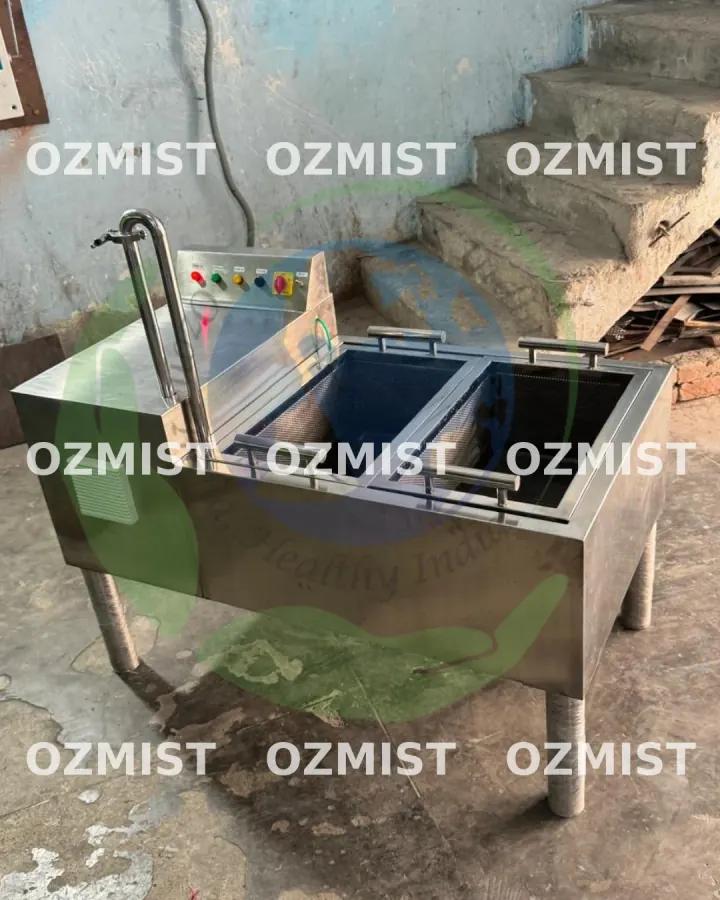
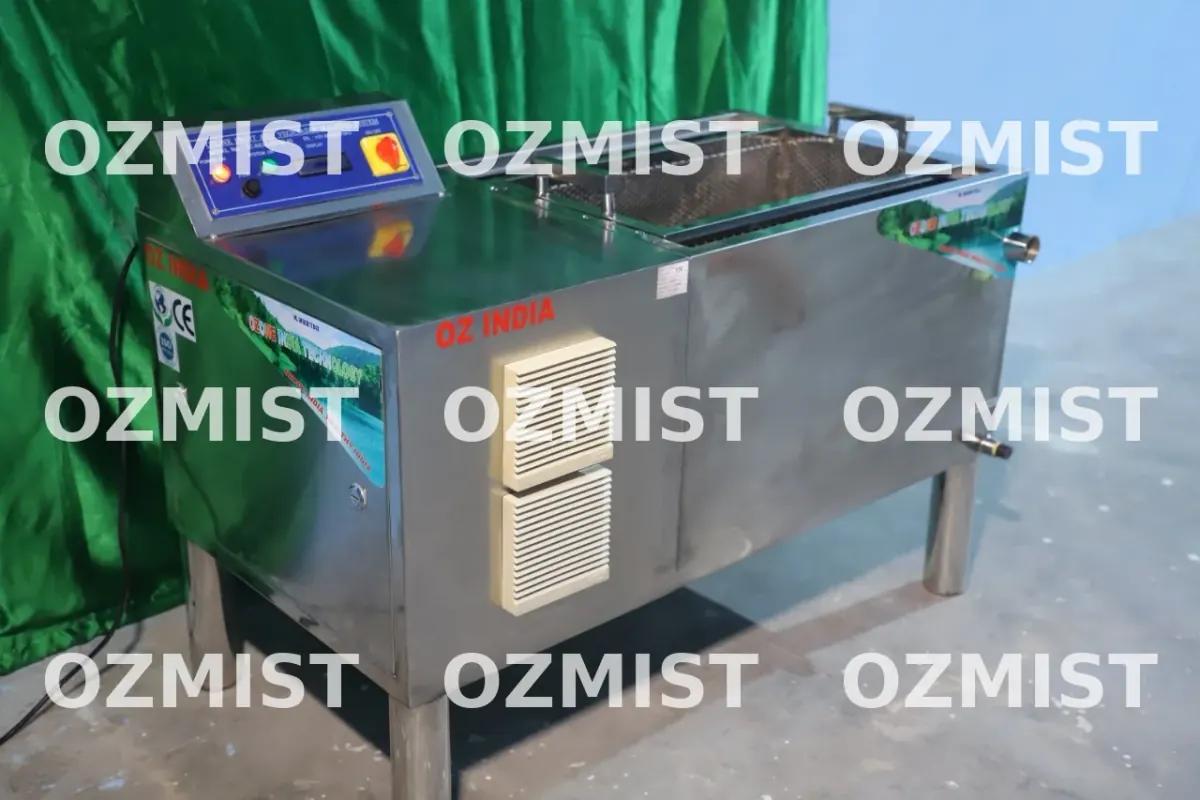
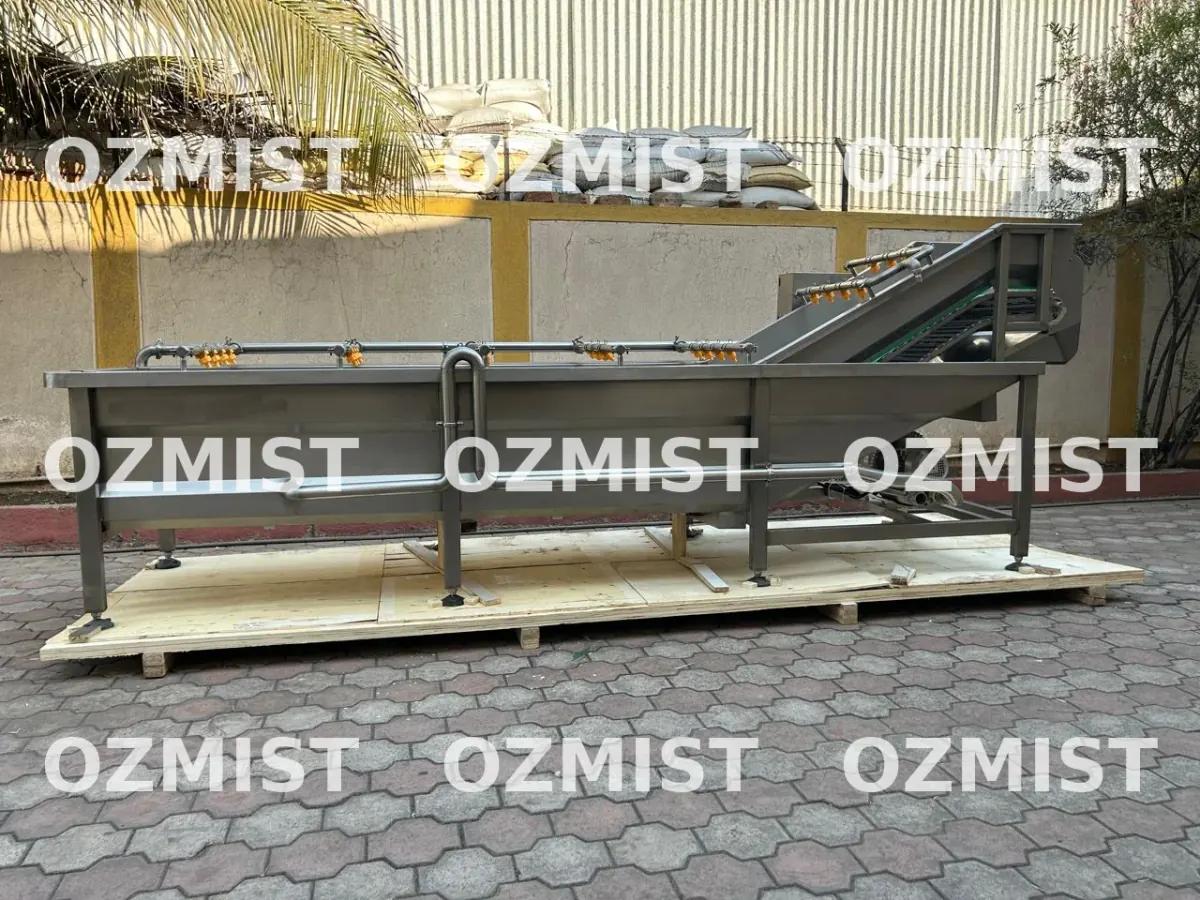
The Bubble Fruit & Vegetable Washer is deployed across a diverse set of Indian industrial and commercial contexts. What follows is a set of expert application briefs prepared by our engineering team, each describing the operating problem, the applicable Indian and international standards, and how Ozmist's configuration is engineered to meet it.
Every application description references peer-reviewed research or a named regulatory standard so procurement teams, quality engineers, and plant managers can validate the claims against their own audit expectations. Sources are cited in the References section at the end of this page. If your application does not match one of the profiles below, contact our engineering team via the quote form — the majority of custom Ozmist installations begin with a spec conversation rather than a datasheet pick.
Cloud Kitchen and QSR Chain Central Prep
Cloud kitchen / QSR · FSSAI Schedule IV; HACCP
Cloud kitchen operators run high-velocity produce prep for salad bowls, wrap fills, and sandwich toppings. Manual sink washing is slow and inconsistent — a bubble washer processes 60 kg of shredded lettuce or spinach every 4 minutes with far superior soil removal than manual dunking. Because bubble agitation is gentle, tender leaves emerge without bruising, which is critical for salad-bowl brands where visual freshness at pack-out drives customer perception. Combined with optional in-line ozone, the bubble washer serves as the microbial CCP in HACCP plans for ready-to-eat products.
Berry and Delicate Fruit Cleaning
Fruit pack-house · GlobalG.A.P.; FSSAI export requirements
Strawberries, blueberries, raspberries, and cherry tomatoes cannot tolerate brush washers or high-pressure sprays — both damage skin and accelerate spoilage. Bubble washing removes soil and inhibits Botrytis and other post-harvest moulds without physical abrasion. Journal of Food Science (2019) documented that bubble washing of strawberries extended cold-chain shelf life by 2–3 days versus static rinse, driven mainly by better surface cleaning and reduced mould inoculum at pack-out. Ozmist recommends the 60 kg or 100 kg model for berry-pack operations with an optional ozone dose of 0.5 ppm for extra microbial reduction.
Leafy Green Processing for Hospitals and Retail
Fresh-cut leafy greens · FSSAI microbiological criteria
Chopped leafy greens for hospital diet counters and modern-retail RTE packs must present with intact leaf structure and no visible soil. Bubble washing is the industry-standard first-stage cleaning for baby spinach, arugula, and mizuna because it dislodges soil trapped between leaf folds without damaging the leaves. Ozmist’s bubble washer is often deployed in a two-stage line: bubble wash for soil removal, followed by dilute ozone rinse (via our Ozone Washer) for microbial reduction. This combination is documented to achieve 4-log microbial reduction while maintaining >6-day retail shelf life at 4°C.
Root Vegetable De-soiling
Root vegetable processing
Potato, carrot, beetroot, and radish come out of the field with heavy adherent soil that must be removed before further processing. Bubble washing dislodges soil clumps quickly without abrasive damage that a rotating brush washer would inflict. For carrots destined for baby-carrot production, gentle bubble washing preserves the epidermis — critical because scraped carrots discolour within 24 hours. Ozmist supplies larger 200 kg and 300 kg models to root-vegetable processors, often integrated with a downstream dewatering conveyor.
Hotel Central Commissary Vegetable Prep
Hospitality · Internal HACCP; brand F&B audit
Five-star hotel commissaries preparing vegetables for banquets and daily buffet service handle wide produce variety—from Mediterranean salad greens to Indian bhaji leaves to garnishes. A single bubble washer replaces multiple stainless sinks and dedicated staff, and delivers per-batch traceability of wash time and water quality. F&B leadership at branded hotel groups is increasingly required by internal audit to demonstrate a documented vegetable-sanitation step, which the Ozmist bubble washer provides through its cycle logs.
Frozen Vegetable Pre-processing
Frozen food processing · ISO 22000
Frozen pea, sweet-corn, spinach, and carrot processors bubble-wash raw material before blanching and IQF freezing. Removing soil and surface microflora before the blanch reduces the microbial load at IQF, extending frozen-product retail shelf life. Journal of Food Protection studies show that upstream bubble washing at 5-minute contact reduces mesophilic count on inbound spinach by 0.8–1.2 log — meaningful when finished-product target is < 100,000 CFU/g at 12 months of –18°C storage. Ozmist bubble washers scale to plant throughput and integrate with plant-wide SCADA.