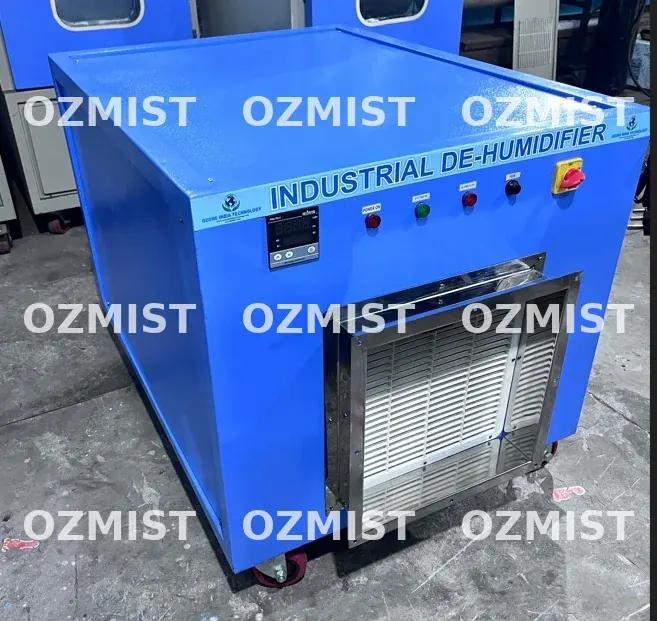
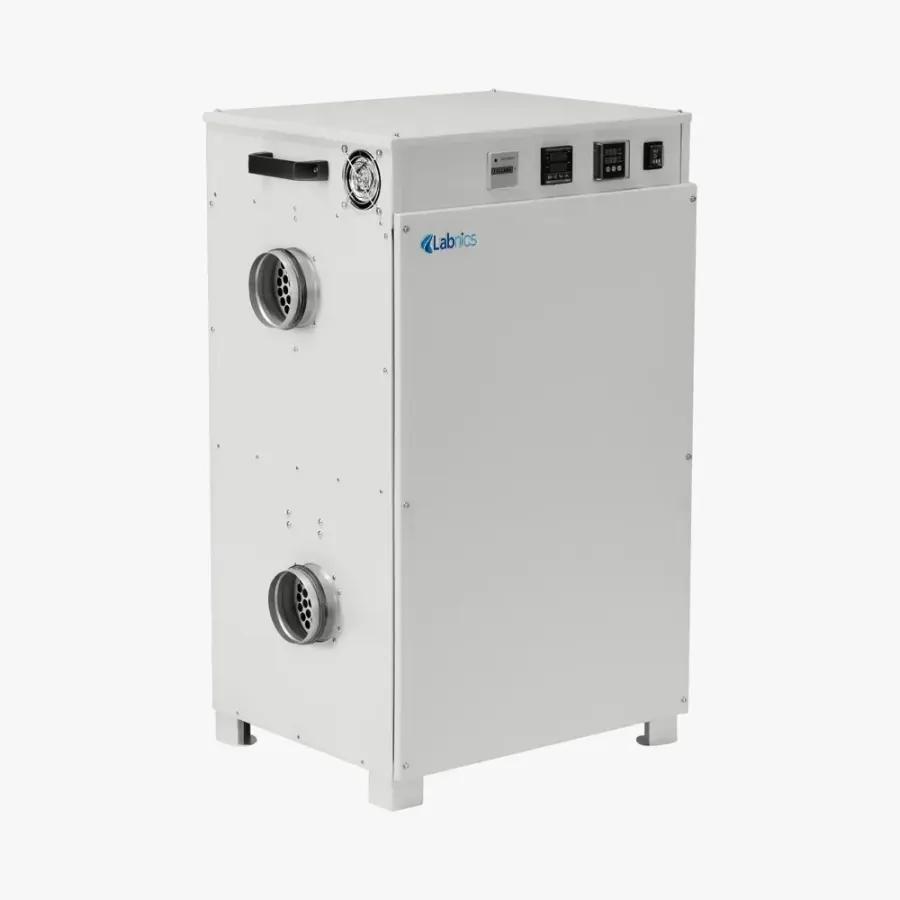
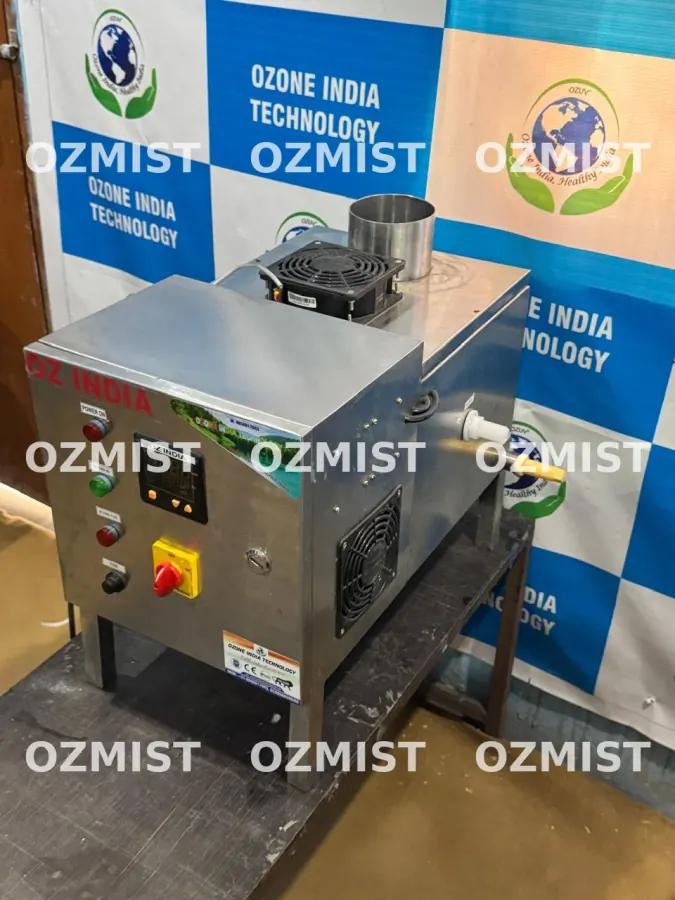
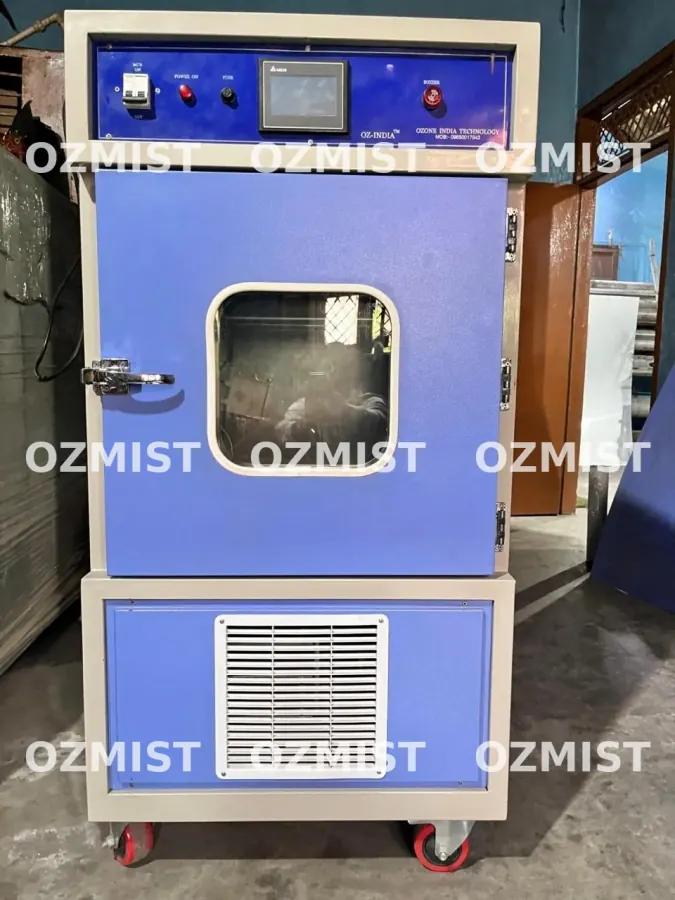
The Industrial Dehumidifier is deployed across a diverse set of Indian industrial and commercial contexts. What follows is a set of expert application briefs prepared by our engineering team, each describing the operating problem, the applicable Indian and international standards, and how Ozmist's configuration is engineered to meet it.
Every application description references peer-reviewed research or a named regulatory standard so procurement teams, quality engineers, and plant managers can validate the claims against their own audit expectations. Sources are cited in the References section at the end of this page. If your application does not match one of the profiles below, contact our engineering team via the quote form — the majority of custom Ozmist installations begin with a spec conversation rather than a datasheet pick.
Warehouse Moisture Control (Pharma, FMCG, Electronics)
Warehousing / logistics · WHO GMP Annex 9; ISO 9001
Warehouses in Mumbai, Chennai, Kochi, and other coastal / high-humidity regions frequently see ambient RH above 75% for months during monsoon. This causes rusting of metal goods, cardboard collapse, medicine degradation, and mould on packaging. Pharmaceutical warehouses in particular must hold RH below 60% year-round per WHO GMP annexure on storage. Ozmist industrial dehumidifiers, sized to warehouse volume and air-change rate, hold target RH continuously. A typical 5,000 m³ pharma warehouse in Chennai requires 3–4 units of the 150 L/day model, controlled from a central humidistat.
Water Damage Restoration and Post-Flood Drying
Restoration and remediation · IICRC S500
After floods, burst pipes, or fire-suppression water release, buildings need aggressive dehumidification within the 24–48 hour window before mould germinates. IICRC S500 standard for water damage remediation prescribes lowering RH to below 50% as quickly as possible. Industrial dehumidifiers at 200–500 L/day extract huge volumes of water from wet building materials. Ozmist supplies restoration contractors with portable 150 and 200 L/day units on casters, with fork-lift lugs for easy deployment across multi-floor buildings.
Cold Storage and Refrigerated Warehouse Loading Bays
Cold chain logistics
Cold-storage loading docks face constant condensation when warm humid outdoor air meets chilled surfaces during pallet in/out movement. This causes floor icing, slip hazards, product wetting, and refrigerator inefficiency. Dehumidifying the dock area to below 60% RH eliminates most condensation and improves both safety and energy efficiency. Ozmist supplies cold-chain operators with low-temperature-capable dehumidifiers (hot-gas defrost) and desiccant units for the coldest docks.
Indoor Swimming Pool and Water Feature Buildings
Aquatic facilities · ASHRAE Applications Handbook
Enclosed pool halls, water parks, and building indoor water features have huge evaporative moisture loads that ordinary HVAC cannot handle. Uncontrolled humidity in these spaces destroys building fabric through condensation on cold surfaces and chloride corrosion. Purpose-built dehumidification, sized to pool surface area and water/air temperature differential, is essential. Ozmist supplies corrosion-hardened stainless variants for chlorinated environments to hotels, gyms, and rehabilitation centres.
Grain, Pulse, and Seed Storage
Agri-storage · FCI storage guidelines
Grain and pulses must be stored below 65% RH to prevent insect infestation and mould that produces mycotoxins like aflatoxin. Uncontrolled Indian ambient during monsoon leads to storage losses estimated at 8–12% of national production. Government warehouses (FCI, state agencies) and private grain traders increasingly deploy dehumidification. Ozmist supplies large 500 L/day models to grain warehouses, with humidistat control that only runs the compressor when RH rises above setpoint — typically saving 30–45% on energy versus fixed-speed operation.
Pharmaceutical Production Suites Requiring Auxiliary Dehumidification
Pharmaceutical manufacturing · WHO GMP; ICH Q7
Solid dosage and biotech production suites often need supplemental dehumidification to hold coating rooms and packaging rooms at 40–50% RH during monsoon. HVAC dehumidification is expensive when it must overcool to remove moisture; a dedicated dehumidifier is more efficient. Ozmist provides pharma-grade variants (316 stainless housing, HEPA-compatible discharge) with 21 CFR Part 11 compatible data logging via BMS interface. Installations in NCR pharma clusters have documented 30–40% energy savings versus HVAC-only humidity control.